
How T-Mobile Is Helping Change the Rules of Baseball
As a Brit, I’m forever bereft of the opportunity to discuss baseball with anyone I know because of the lack of interest in the UK. However, T-Mobile has kindly afforded me an opportunity to talk about the sport through work. Earlier this year, the company introduced the Automated Ball-Strike (ABS) challenge system in the US, which it’s enabling through private mobile networks.
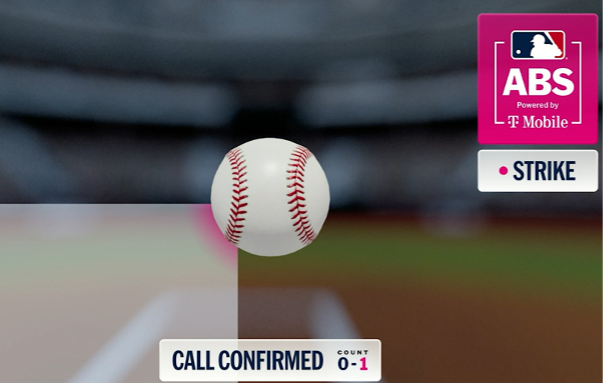
The ABS challenge system is one of the biggest changes to “America’s pastime”. It introduces a way for either team to challenge a decision made by the home-plate umpire (the main official) as to whether the baseball, when pitched, has gone through the strike zone, resulting in a “strike”, or has missed the zone, resulting in a “ball”.
This isn’t the first time that technology has been introduced to aid baseball officials. The instant replay review system — an adjudication system similar to the video assistant referee, or VAR, in football — has been around for 12 years for more subjective decisions. ABS, however, is more like football’s goal-line technology as its output is a binary decision: a strike or a ball. Also, like football’s goal-line technology, it uses the Hawk-Eye computer vision system to track the location of moving images.
To prevent unnecessary stoppages, the Hawk-Eye technology needs a secure, fast and reliable connection. The prevention of the unwarranted lengthening of baseball games is particularly important to Major League Baseball (MLB) to boost fan attendance. It’s prompted major changes like the introduction of the pitch clock, which reduced game time and helped it appeal to a wider set of fans. So it’s vital that any negative impact on game times from the new review system is negligible.
T-Mobile has been tasked with ensuring this. In all 29 MLB stadiums in the US, it uses a 5G private mobile network to transfer pitch data from 12 Hawk-Eye cameras. This enables the system to verify the pitch location if a challenge is made, either vindicating or correcting an umpire’s initial decision, and communicating this simultaneously to all players, coaches, umpires and fans.
It took over 18 months to install private mobile networks in all US ballparks, with the technology using 20 MHz of 2.5 GHz spectrum to provide sufficient bandwidth. According to a T-Mobile spokesperson, the company considered using shared Citizens Broadband Radio Service (CBRS) spectrum, but concerns about interference with Navy applications, combined with it not having a 5G standalone ecosystem, drove the decision to use 2.5 GHz frequency. The solution uses Ericsson’s Private 5G and Dot radios, with 11 Dot radios dotted throughout each ballpark.
The technology’s reception appears mostly positive and, because its decisions are objective, there’s little chance of controversy. Still, it’s a big responsibility for T-Mobile, which could suffer brand damage from a major error. T-Mobile will also benefit from the significant in-game advertising opportunity that the ABS system provides, with MLB reporting that viewership on nationally televised games and MLB.TV games increased during the 2025 season.
The solution also aligns with the market leadership position now claimed by T-Mobile, as we discussed in T-Mobile Moves from Disrupter to Join Market Leaders. T-Mobile also provides separate dedicated connectivity solutions for MLB team staff, officials and the press, again using Ericsson’s Radio Dots.
Providing the private network behind ABS could become an important case study for T-Mobile as it looks to grow its sports and venue connectivity business. Baseball is particularly attractive because of the scale of the MLB calendar: the league has 2,430 regular-season games. For comparison, the English Premier League only has 380 matches a season. This creates far more recurring demand for connectivity than short-duration events such as major golf tournaments, which typically only last four days. T-Mobile also provided a private mobile network for the PGA Championship in early May.
As we noted in Fan Experiences Offer Operators a Path to New Revenue from 5G, providing connectivity for sports stadiums can drive major commercial revenue. T-Mobile isn’t the first operator to do this in the US. Verizon has secured a similar private mobile network deal with the National Football League to enable private and secure communication connectivity for coaches. We could see other operators attempting a similar strategy, anchoring their investment in a sports venue through a sports-critical need, and then offering access to consumers through a dedicated network slice.
Private mobile networks like the one deployed by T-Mobile are crucial in sporting environments to provide secure, reliable connectivity. The alternative of using a public network could burden key infrastructure with traffic overload from thousands of spectators. With high-precision tracking systems like Hawk-Eye becoming more common, we could see a rise in technology-enabled officiating decisions that need reliable connectivity through solutions like private mobile networks.
T-Mobile has capitalized on a major sporting opportunity to deploy a private mobile network. We’ll watch closely to see which operator follows next.

 LinkedIn
 Email
Email
 Facebook
 X
X