Augmented Expectations
Virtual and augmented reality poised to build on a positive year
As we reach the close of 2020, many will be glad to see the back of a difficult year. The same is true for some categories of technology, which have seen slowing sales amid consumer uncertainty. But one technology that may look back on this year as instrumental in its development is extended reality (XR).
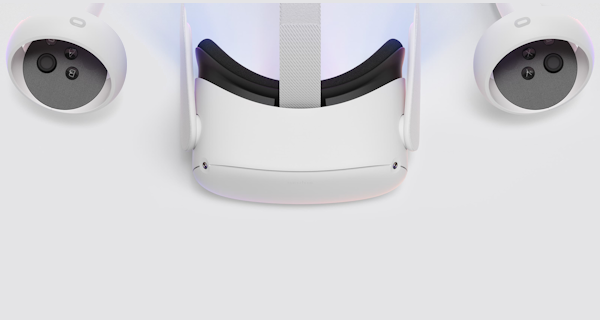
Augmented reality has been a breakout star in 2020, providing an important route for many companies to deliver business continuity in challenging times. In the consumer market, exciting new devices have launched; for example, the Nreal Light (a hugely promising device that I’ve previously written about) hit the shelves in South Korea and will be landing in Japan and Europe imminently. The same is true for virtual reality, with Facebook’s latest headset, the Oculus Quest 2, proving immensely popular since its release. Pre-orders for the device were five times greater than the original Quest, highlighting very strong demand from customers.
Without doubt, it’s an exciting time, and I’m seeing promising signs that the progress in XR is continuing to pick up the pace. This is extremely important because we’ve seen false dawns before. A cautionary tale comes from the huge levels of hype for virtual reality in the mid-2010s, when it was promised as a game-changing, mass-market technology, but then failed to spark interest among underwhelmed consumers. However, this time, there are clear signs that the technology is ready to succeed. Virtual and augmented reality devices are becoming more prevalent in the public consciousness, and are beginning to deliver truly innovative user experiences that make the technology stand out.
This is thanks to impressive work throughout the hardware and software spheres. We now have better XR devices than ever before, which can also prove their value with a better variety of content. I’ve written before about the need for strong integration throughout the XR stack so that the technology can live up to its promise, and this year has really backed this up. Hardware and software that are developed in tandem help to accelerate product development, leading to a better user experience, and ultimately greater success for the market. For that reason, it’s worth taking a look into the dynamics at play in the ecosystem.
There are several names that will be familiar to anyone who follows the XR industry. Hardware makers like Oculus, Sony and HTC are household names for many consumers, whether thanks to their virtual reality headsets or otherwise. But there’s an ocean of other players innovating and advancing the wider ecosystem that are worth celebrating too.
A company that continues to take a big role in this regard is Qualcomm. It has been pivotal in the development of many XR devices, having placed big bets on the technology becoming the mobile computing platform of the future. It has brought a wealth of expertise in chipsets, and its Snapdragon line has become a staple of mainstream XR devices, currently powering more than 40 of them globally. It began with chipsets borrowed from smartphones, before moving on to dedicated platforms for VR and AR experiences with its Snapdragon XR1 and XR2 platforms. The latter drives the Oculus Quest 2, meaning the headset packs a powerful punch in a fully standalone device.
This commitment goes further. In a recent webinar, Qualcomm highlighted the work it’s doing to nurture the wider XR ecosystem, on the understanding that this will in turn help the market grow. This work takes place through several channels. The company runs a Qualcomm Head Mounted Display Program, an initiative that aims to accelerate progress with XR headsets and offers a reference design incorporating the best in XR technology from all over the market. This makes it easier for new players to quickly design and manufacture new devices and bring them to market.
Separately, its XR Optimized program aims to speed the development of tethered-to-smartphone devices — like the Nreal Light — by helping manufacturers align with reference specifications and certifications. In addition, an XR Enterprise Program aims to unite a global community of hardware and software solutions to advance the technology in a wide range of industry sectors.
Efforts like these have given the entire XR ecosystem more confidence. Content developers can work with hugely improved hardware to deliver new and exciting content, including immersive games, live events, fitness experiences, enterprise tools for training and product design, and much more. And device makers are able to advertise their increasingly capable products to customers, with the bonus of an ever-growing pool of services and solutions to sweeten their offerings.
These initiatives underline the importance of the wider ecosystem to the success of a technology, and of major technology players placing bets and putting their resources into new platforms. Looking forward, I believe that greater things will come; 2021 and beyond will see more XR devices and more attractive content hit the market, continuing the progress the industry has been made this year. The virtuous circle of development has coalesced for XR, and it’s beginning to turn with more promise than ever before.

 LinkedIn
 Email
Email
 Facebook
 X
X