Brand Building, Travel eSIM and New Entrants Dominate at MVNOs World
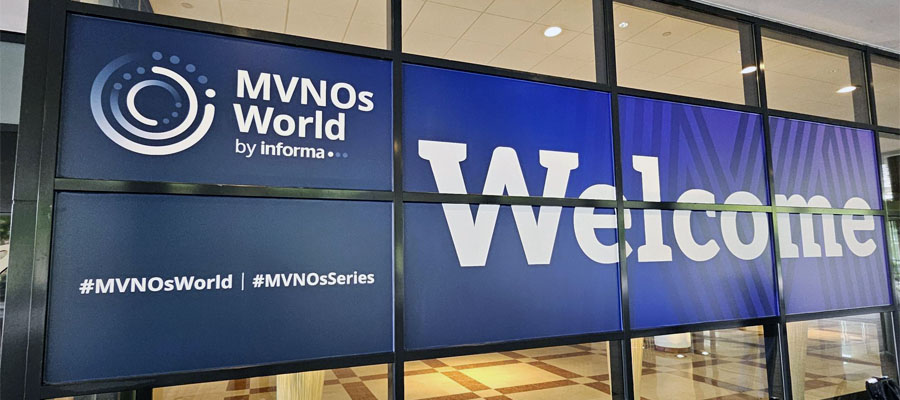
It was great attend the MVNOs World event in Amsterdam this week. The conference brought together hundreds of people across the industry for three days of workshops, presentations and panel discussions.
The mobile virtual network operator (MVNO) space is as vibrant as ever. Established players continue to enjoy good growth, new entrants from sectors such as financial services are breaking into the market and customers are increasingly hunting down low-cost plans amid a squeeze on household spending.
Data from FDM CCS Insight highlights the growing influence of MVNOs in the UK. We estimate that MVNOs represent 21% of the market, up from 15% only four years ago. By the end of this decade, we forecast their share will jump to 26%.
In this blog article, I share my top five headlines from an insightful few days in the Dutch capital.
MVNOs need to add value rather than just compete on price
This was a recurring message through the event, with several speakers pointing out that it’s no longer good enough to simply undercut the rest of the field. Successful MVNOs need to differentiate, create deep and lasting customer relationships, interact more intelligently, and build trusted experiences.
A few presenters referenced “game changers” in other industries, and some bemoaned a lack of innovation in telco beyond airtime and devices. There was consensus about not just selling connectivity but the services it unlocks and the importance of building a brand. This makes sense, but I’ve heard it many times before. Maybe now, with all the excitement about AI, it’s more relevant than ever.
Almost anyone can become an MVNO
The barriers to enter the mobile market have never been lower, helped by the rise of aggregators and enablers that can do much of the heavy lifting. This has contributed to a flood of new and prospective entrants, including some well-known brands like Revolut, Lidl and Octopus Energy and some that are less expected, like Millwall Football Club and President Trump.
At the event, we heard from MVNOs that are focused on distinct market segments. A few that stood out include Meow Mobile, a mobile plan aimed at cat-lovers that includes round-the-clock vet care; Spacetalk, which offers SIMs with family safety features built-in; Patriot Mobile, which targets American Christian conservatives; Undo, a carbon-neutral MVNO from Belgium; and Misunderstood Mobile, which wants to offer a service for neurodivergent adults, parents and carers.
The choice of “light MVNO” versus “full MVNO” is crucial
This topic was discussed by Sky Italia, which is transitioning from being merely a reseller of Fastweb SIM cards into a fully fledged MVNO. Since it launched in 2024, it has operated in a “white label” capacity, referencing its service as “Sky Mobile powered by Fastweb”.
A full MVNO has a core network and billing systems, owns the SIM cards and customer relationships and has greater freedom in creating mobile offers. But it also has higher operational costs and regulatory responsibility.
Light MVNOs — such as Revolut or Barca Mobile — can launch quickly and focus mostly on building their brand and engaging with customers. However, they sacrifice a lot of control and would need to do a full SIM swap if they change host network. The presenter said that the choice of which path to take is a strategic, long-term decision, and that becoming a light MVNO should not be considered a temporary step to becoming a full MVNO.
The travel eSIM market is unsustainable in its current form
Travel eSIM — a topic reviewed extensively in FDM CCS Insight’s recent Spotlight report — was an important focus at the Amsterdam event. With more than 100 specialist providers in a homogenous and highly fragmented market, there was consensus that strategies need to evolve from low prices to product differentiation.
For example, one presenter said that to improve loyalty, providers could move toward offering a permanent eSIM that can be downloaded once and used for repeated trips. Others agreed that it’s time to shift focus from purely selling eSIMs to embedding connectivity into the travel journey. This could be achieved by partnering with companies like airlines, airports and hotels to offer a mobile plan at the right moment during the journey to book a trip.
MVNOs aren’t without their challenges
The event was understandably upbeat, but it’s not all plain sailing for MVNOs. Market consolidation is starting to take place in Europe, reducing the number of potential network partners, albeit softened by remedies put in place by regulators. The flurry of new entrants is bringing a competitive threat to existing MVNOs, and major technology companies such as Starlink and Apple are often touted as potential market disruptors. And, just like their network operator partners, MVNOs face multiple challenges with flatlining customer spending, the rising cost of mobiles phones and economic uncertainty.
Overall, MVNOs World was a great event that raised provocative questions and encouraged engaging discussions. FDM CCS Insight will continue to monitor the MVNO segment — subscribe to our blog and follow us on LinkedIn to stay updated.

 LinkedIn
 Email
Email
 Facebook
 X
X