CES 2026: Day Zero Update
On the eve of the show’s official opening, news in Las Vegas was dominated by updates from semiconductor manufacturers, analysed below. We’ve also highlighted some product-related developments.
We’ll provide further updates in the coming days as the show officially opens its doors. Keep in touch with us on LinkedIn and subscribe to the CCS Insight blog to access our daily insights.
Semiconductors
Nvidia Announces Its Rubin Platform
Nvidia’s domination of the AI landscape means it has come to define CES. Although a “Consumer” Electronics Show wouldn’t usually be the forum for the announcement of a new chip for data centres, Nvidia’s reveal of its new Vera Rubin platform (the successor to Blackwell), underlines the company’s role at the heart of the AI ecosystem. Testimonials from the CEO of every leading technology company at the forefront of AI encapsulate its importance and the depth of the moat around Nvidia platforms and tools.
Crucially, Nvidia pledged that Rubin will cut running costs to one-tenth of that of Blackwell and certain models can be trained using a quarter as many chips. This is a big step forward in addressing the economic challenge of AI deployment and further scaling the opportunity for AI. It’ll also accelerate development and significantly raise the bar for the competition. Technical leadership coupled with ongoing investment in its leading tooling and open models for industry continue to set Nvidia apart.
Intel Showcases Core Ultra Series 3
Intel has launched its long-awaited Core Ultra Series 3 processors, previously codenamed Panther Lake. This is a significant launch for Intel, representing the first chips using its Intel 18a, 2 nm platform and will see the launch of mid- to high-tier systems from the end of January 2026.
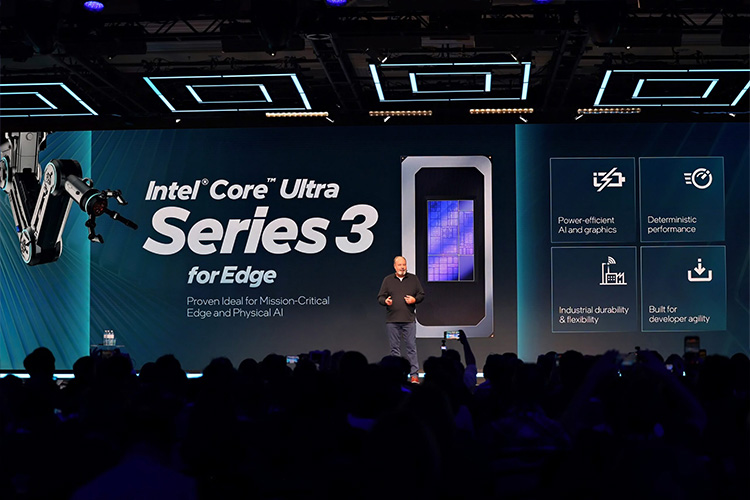
This promises to be a big step in addressing performance shortcomings compared with AMD and Qualcomm, with improved power efficiency and performance. Intel claims that the top units will deliver up to 27 hours of battery life, with 16 CPU cores delivering a 60% improvement to multithread performance and over 77% faster gaming performance.
The new chipset platform also sees Intel promoting the CPU and GPU alongside its new NPU 5 architecture for AI workloads. With Nvidia set to disrupt the high-end PC market with a GPU-led story, CCS Insight believes that a more-balanced approach to CPU, GPU and neural processing unit (NPU) for AI workloads is likely to be reflected by the wider PC industry. This contrasts with the NPU-led ethos seen with the launch of Copilot+.
More than 200 design wins for the platform represent sound commercial traction, and the launch coincides with the first batch of systems using Qualcomm’s Snapdragon X2 Elite, as well as the introduction of the AMD Ryzen AI 400 series and Qualcomm’s Snapdragon X2 Plus, discussed below, at CES 2026.
Qualcomm Strengthens Its Robotics Offering
The new Dragonwing IQ10 targets a wide range of robotics, from focused consumer robots and industrial robotics to humanoid robots. Alongside the IQ10, Qualcomm emphasized its comprehensive full-stack architecture and AI model support. Qualcomm argues that it’s well-positioned for robotics because it builds on the company’s existing autonomous-driving expertise. However, CCS Insight cautions that the robotics sector is a different and less well-defined market than the automotive sector, and products will need to evolve to match commercial needs.
The IQ10 chipset includes a range of Qualcomm technologies, including Oryon processor cores first used in its PC chipsets, Adreno graphics, a Spectra integrated signal processor optimized for low-light camera processing with machine vision, and a multicore Hexagon NPU for running vision language action (VLA) models, something we predicted in our event preview. For connectivity, the chipset includes wired industrial connectivity — USB, PCIE Gen5, 10 Gb Ethernet — but notably lacks on-board cellular wireless support despite Qualcomm’s strengths in that area, indicating Qualcomm sees it as less important now for robotics applications.
Also, Qualcomm highlighted its robotics ecosystem partners: Advantech, Aplux, AutoCore, Booster, Figure, Kuka Robotics, Robotec.ai and VinMotion. As others have done at CES, Qualcomm marketed humanoid robots strongly, but industrial and narrow-function consumer robotics are a nearer-term commercial opportunity as they require less-complicated machine vision and AI action models to succeed.
Nvidia Again Aims to Accelerate the Robotics Ecosystem with New Physical AI Models
Nvidia believes that high-powered silicon isn’t enough to enable generalist robots. Such general-purpose robots will require advanced models that can understand and act on the physical world. At CES 2026, Nvidia unveiled three new open models: Cosmos Transfer 2.5 and Predict 2.5 to create synthetic data and simulated real worlds; Cosmos Reason 2, a vision language model to enable robots to understand and act on their surroundings; Isaac Gr00t N1.6, a VLA model to enable full body control for humanoid robots.
All the models are available through Hugging Face. Nvidia will hope that by offering these models, it’ll tie robotics developers into the Nvidia ecosystem and hardware, with which these models are guaranteed to work well. Nvidia showcased partner efforts from Boston Dynamics, Caterpillar, Franka Robotics, Humanoid, LG Electronics and Neura Robotics, demonstrating Nvidia’s traction with well-known brands. Nvidia is taking a similar open approach with its new Alpamayo models for autonomous vehicles.
However, there remains a long way to go to realize the vision of humanoid robots that can replace humans in multiple scenarios. Along the way, the efforts to create truly generalist robots will improve the capabilities of robots focused on one or multiple tasks.
Qualcomm’s Expanded IoT Portfolio Debuts
Qualcomm took the opportunity to show off the breadth of its internet of things (IoT) products. Although they aren’t fully integrated, this marks the completion of a period of significant acquisitions. In just the past 14 months, Qualcomm has added Augentix, Arduino, Edge Impulse, FocusAI and Foundries.io. This range straddles a wide set of market sectors from large enterprise to small developers. At CES 2026, Qualcomm highlighted the importance of machine vision — not just in automotive and robotics, but in the wider IoT market — with new Dragonwing Q-8750 and Q-7790 chipsets. For example, the Q-8750 supports up to 12 physical cameras.
Silicon Competition in the PC Market Increases Again with Snapdragon X2 Plus
At CES 2026, Qualcomm announced the second generation of its mainstream chipset, the X2 Plus, rather than focusing on the previously announced X2 Elite platform. The X2 Plus includes third-generation Oryon cores and boosts the NPU to 80 trillion operations per second or TOPS, the same as the Snapdragon X2 Elite.
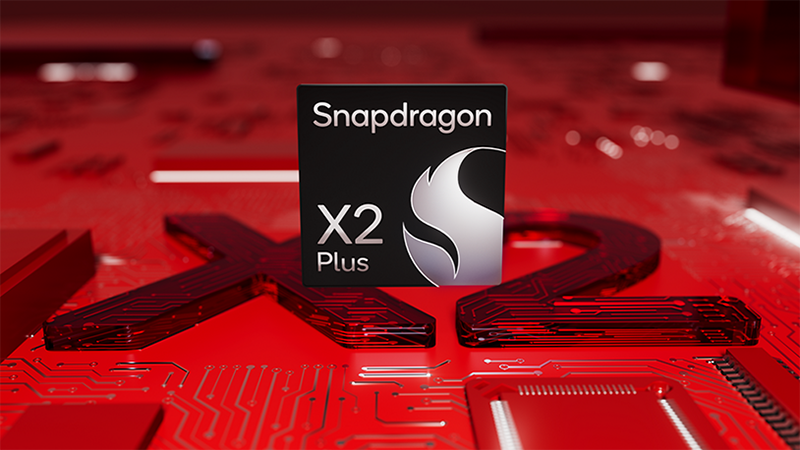
Qualcomm hosted most of the leading PC manufacturers at its CES event — Acer, Asus, HP, Lenovo, Microsoft and Samsung — but it’s unclear how many PC models will be launched in 2026 using this chipset. After more than two decades with a single dominant processor architecture, the PC market is again seeing competition, with momentum for Qualcomm’s Arm-based chipsets. MediaTek and Nvidia could raise the competitive stakes for Intel further in 2026 if they launch mainstream Arm chipsets for PCs.
MediaTek’s Filogic 8000 Chips Mark Early Steps toward Wi-Fi 8
MediaTek announced its Filogic 8000 series of Wi-Fi chips at CES 2026, positioning them among the first to support emerging Wi-Fi 8 capabilities.
Rather than focusing solely on headline speed gains, MediaTek is framing Wi-Fi 8 as a platform built for an AI-driven connectivity environment. The company emphasized advances in multi-access point coordination, spectrum efficiency and coexistence, wider coverage and range, and improvements to latency and reliability. These enhancements should enable smoother connections, lower interference and more-consistent performance in dense device environments, which is a key requirement for uses such as industrial automation and augmented reality (AR).
MediaTek is moving early, with the first chipsets expected to reach customers later this year. However, we believe consumer devices with Wi-Fi 8 support are still a few years away, particularly as Wi-Fi 8 standardization isn’t expected until about 2028.
Display Tech: Creaseless Foldable Screens
As outlined in our expectations for CES 2026, the major emerging trend for large displays such as TVs and monitors has been the adoption of Micro RGB technology. However, display innovation is also occurring on smaller devices, and we note with interest that Samsung Display demonstrated a “creaseless” foldable OLED display at its CES 2026 showcase.
Although the crease in foldable smartphones has diminished substantially since early generations, it’s still present in the latest devices, such as Samsung’s Galaxy Z Fold7. The new display has no discernible crease, and there’s widespread speculation that it’ll be used in Samsung’s next flagship foldable — likely the Galaxy Z Fold8 — and potentially in Apple’s much-rumoured foldable iPhone.
PC-Makers Unveiled a Slew of New Laptops
As has become a regular feature of CES over the years, all the major PC manufacturers have announced updates to their product portfolios, primarily focused on laptops.
There were updates from Acer, Asus, Dell, HP, Lenovo, Microsoft and Samsung, as well as smaller brands. The focus remains on thinner products with longer battery life, using chipset platforms from Intel, Qualcomm and others (see above). Interestingly, the show also saw the return of Dell’s much-loved XPS brand to its laptop range.
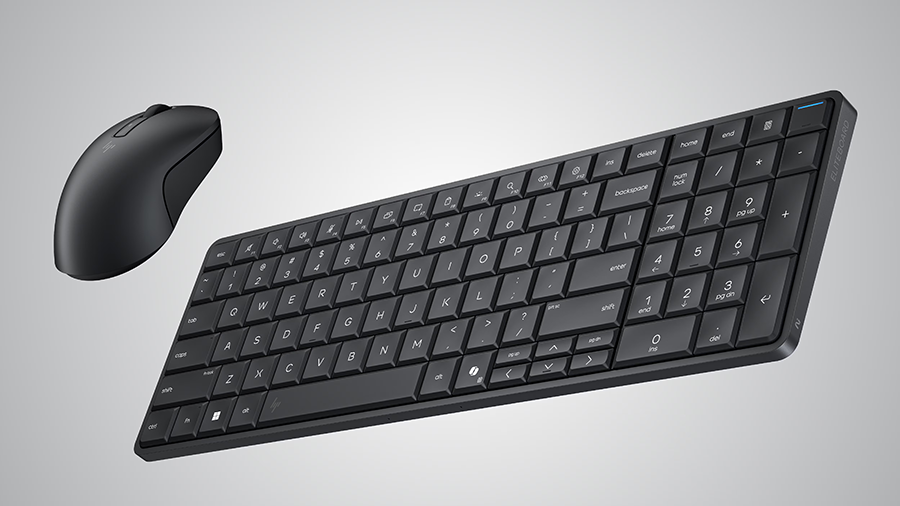
One unusual product that caught our eye was the HP EliteBoard G1a keyboard, which integrates an all-in-one PC. Due to be launched in March 2026, it looks like a standard desktop keyboard, but when connected to a monitor and wireless mouse, it offers a full Windows PC experience. Powered by an AMD Ryzen AI 5 or 7, it meets the specifications required to be classed as a Copilot+ PC by Microsoft. It feels like a product designed for regular hot-deskers, such as those working in a call centre.
Smart Glasses
Another major hot topic ahead of CES 2026 was smart glasses. We outline two major announcements below:
Asus ROG Unveils Partnership with Xreal for AR Gaming Glasses
Following its split from Meta and its Horizon OS platform at the end of 2025, Asus announced a pair of gaming-optimized smart glasses under its Republic of Gamers (ROG) brand. The ROG Xreal R1 gaming glasses offer similar specifications as the Xreal One Pro glasses, but focus on complementing Asus’ PC technology. The product can be connected to a user’s PC or other compatible devices, such as the ROG Xbox Ally, to provide a giant virtual and anchorable screen.
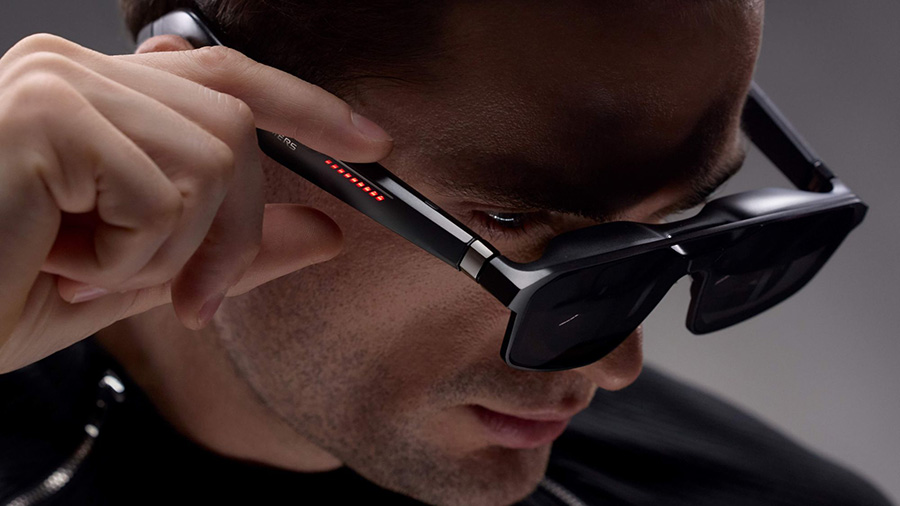
We find this particularly notable in the context of the market’s shift away from virtual reality (VR) headsets toward AR glasses. VR has struggled for momentum of late, with many players — notably Meta — switching from VR headsets to AR and AI-powered smart glasses. Uses for VR remain largely limited to gaming and entertainment, and product shipments have remained subdued. Now, with screen-mirror AR glasses starting to emerge as cheaper and less unwieldy alternatives VR headsets, we expect this momentum to accelerate throughout 2026.
Xreal also unveiled its new screen-mirror glasses, Xreal 1S, at the event. The product is an updated and improved version of the entry-level Xreal One glasses, offering a higher definition screen (from 1080p to 1200p), a widened field-of-view (from 50 degrees to 52 degrees) and increased brightness (from 600 nits to 700 nits). Most importantly, the price of these glasses is $50 lower than its predecessor. We believe the AR market will continue to rapidly accelerate over 2026 as products improve and prices fall.
Rokid Enters Display-Free AI Glasses Market with Rokid AI Glasses Style
The Rokid AI Glasses Style glasses claim to be designed for all-day wear and support multiple AI engines, including ChatGPT and DeepSeek, as well as working with Google Maps. The device attains 12 hours of battery life through a dual-chip set-up, with a basic NXP RT600 chip handling low-power tasks and Qualcomm’s AR1 silicon handling the heavy AI and imaging workloads.
Rokid states that the camera can record up to 10 minutes of footage, which is considerably longer than the current Ray-Ban Meta glasses. At $300, the product is similarly priced to the entry-level Ray-Ban Meta glasses and, we expect, the forthcoming Google–Warby Parker glasses. That said, without the backing of a major fashion label, we expect Rokid to remain a minor player in the AI glasses market outside China.
Clicks Expands from Accessories, Launching Its First Smartphone
Clicks Technology, which offers accessories that can be added to an existing smartphone to provide a physical qwerty keyboard, has now launched an Android smartphone. As expected, the Clicks Communicator also includes a physical keyboard. At $400, it targets a niche audience that values the physical keyboard popularized by BlackBerry devices, or simply wants something different from today’s homogeneous smartphone designs. It’s being positioned as a secondary smartphone for business professionals or older people who prefer a physical keyboard.
The company also unveiled the Clicks Power Keyboard, offering a physical keyboard and a wireless charger. We were intrigued by Clicks’ accessories when the company first launched, but sceptical about its potential for success. These new products indicate some early success, but scaling a smartphone business could prove more challenging than focusing on accessories. We’ll continue to monitor the company with interest.
Lego Makes an Appearance at CES
In its CES debut, Lego captured attendees’ imagination with the introduction of the Lego Smart Brick.
The new bricks integrate miniaturized components and sensors — including a custom application-specific integrated circuit — to enable them to light up, interact with other bricks and produce sound through an integrated speaker. In demonstrations, the Smart Brick was attached to models such as aeroplanes, cars, figurines and even ducks, recognizing and replicating sounds, changing light colours and reacting to movement.
The system uses the Bluetooth-based BrickNet protocol, as well as Smart Tags and Smart Minifigures, designed to enable precise positioning and rich interactivity in builds. Notably, the Smart Brick has no external buttons or switches, and Lego is launching a wireless charger alongside the system.
Few additional details were available, but this is undoubtedly a highly consumer-centric example of technology at the show, and we’re impressed by the amount of coverage it has received.
FDM | CCS Insight will be publishing daily updates from CES 2026, covering significant announcements as they emerge. Subscribe to our blog and follow us on LinkedIn to make sure you don’t miss the top stories.


 LinkedIn
 Email
Email
 Facebook
 X
X