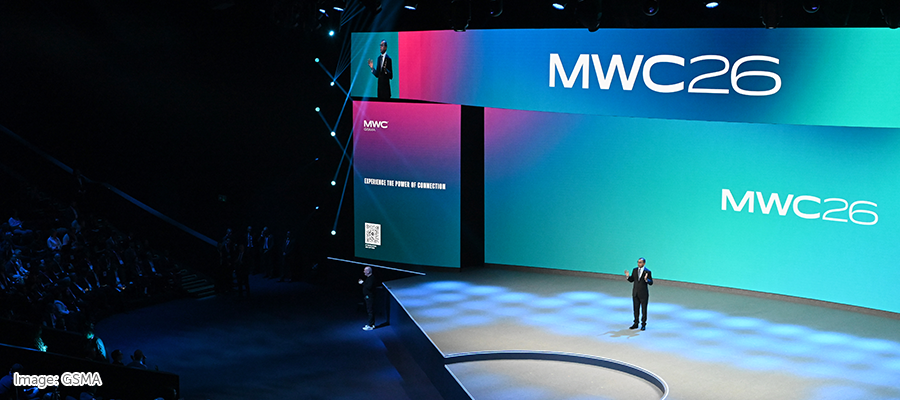
MWC 2026, Monday 2 March
MWC 2026 has officially kicked off in Barcelona, and the FDM CCS Insight team is on the ground following the latest news and announcements and watching out for this year’s hottest topics and trends.
In this blog, we highlight today’s big stories, spanning satellite, sovereignty, 6G, AI, cloud and new devices.
Remember to subscribe to the FDM CCS Insight blog to receive our daily insights from MWC 2026 straight to your inbox.
Orange Announces Two Satellite Direct-to-Device Deals with AST SpaceMobile
Orange has signed two memoranda of understanding (MOUs) to improve mobile direct-to-device coverage using satellites. The first, with AST SpaceMobile, is to develop a service for Orange subsidiaries outside Europe to complement their terrestrial mobile networks. Given Orange’s strong presence in Africa, and the continent’s coverage gap, this represents a fertile opportunity.
The second is with AST SpaceMobile and Vodafone Group’s joint venture Satellite Connect Europe (recently rebranded from SatCo), which has exclusive access to resell AST SpaceMobile’s satellite services in Europe. The Orange partnership is the first beyond Vodafone to be publicly announced by the joint venture and aims to provide satellite direct-to-device services in several of Orange’s European markets. The two companies will provide a demonstration of the service in Romania in the second half of 2026.
The agreement between Orange and Satellite Connect Europe is non-exclusive, but raises questions for Orange’s other satellite direct-to-device partner in France, Skylo, which launched a service with Orange in December (see Satellite Stars for Orange at OpenTech 2025). AST SpaceMobile’s service isn’t likely to launch until the end of 2026, but it should have greater capabilities than Skylo’s, with voice and data services expected. The MasOrange subsidiary, which Orange is in the process of acquiring in full, has agreed an MoU with Starlink to trial direct-to-device services in Spain. Orange Group also maintains a fixed broadband satellite agreement with Eutelsat. Taking these announcements together, Orange stands out as one of Europe’s most diversified telcos in satellite partnerships, clearly pursuing a multipartner strategy to hedge technological and commercial risks.
Satellite Connect Europe Strengthens Case for European Spectrum Rights with Telefonica Collaboration
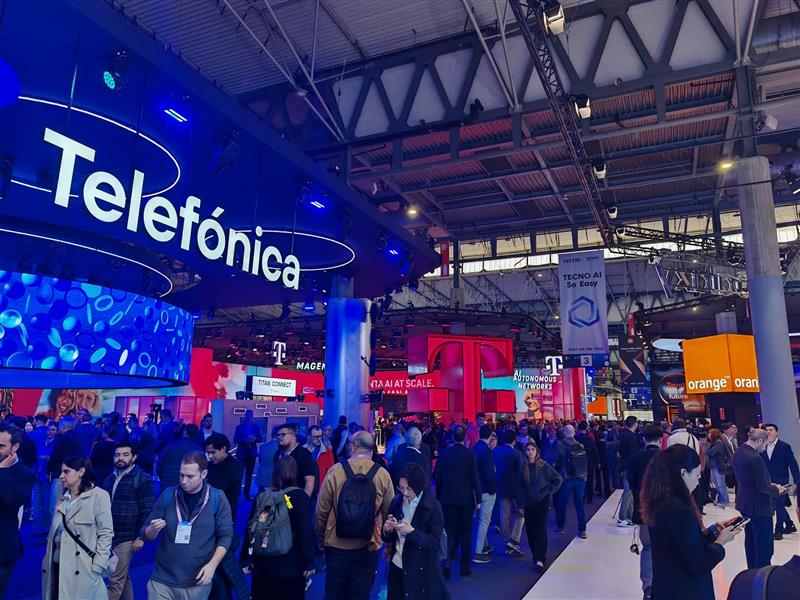
Telefonica announced it’s engaging with Satellite Connect Europe to explore direct-to-device satellite connectivity in Spain and Germany. The company expressed its desire to find a policy solution that aligns with European regulatory framework and spectrum usage requirements. This was a tacit nod toward Satellite Connect Europe’s ambition to secure the priority rights for S-band mobile-satellite service (MSS) spectrum currently held by Viasat, which are due to expire next year. This would greatly improve AST SpaceMobile’s satellite direct-to-device offering in Europe.
Telefonica is the third major European operator to be associated with Satellite Connect Europe, alongside Orange and Vodafone as a shareholder in the company. Satellite Connect Europe positions itself as providing a sovereign satellite solution at a time when European countries and businesses want to rely less on Chinese or US companies. With the support of major European operators as well as a Germany-based control centre, Satellite Connect Europe hopes to appeal to EU regulators and governments.
Interestingly, Telefonica’s part-owned subsidiary Virgin Media O2 also launched a satellite direct-to-device service in the UK with AST SpaceMobile’s main competitor, SpaceX Starlink. However, Telefonica’s agreement with Satellite Connect Europe is more about working together to develop opportunities for satellite direct-to-device, rather than a full partnership. We believe that Telefonica may be waiting for the regulatory and technological landscape to develop fully before committing to a European sovereign satellite partner.
Deutsche Telekom Diverges from European Operators, Partners with Starlink for Satellite Direct-to-Device
In contrast with Orange and Telefonica partnering with Satellite Connect Europe, Deutsche Telekom announced that it’s teaming up with Starlink to launch a direct-to-device satellite service for its 10 European markets in early 2028. The service will provide connectivity to devices in areas beyond the reach of Deutsche Telekom’s mobile towers.
The launch is still two years away, giving Starlink time to ensure that enough devices and chipsets are compatible with its MSS spectrum, which it purchased from EchoStar for $17 billion in August. The delay is also because the service will rely on Starlink’s next-generation satellite technology. This brings improvements over its predecessor, but it’ll take time for the satellites to be rolled out to create a constellation with continuous coverage across Europe.
By waiting until 2028, however, Deutsche Telekom won’t need to give up valuable terrestrial mid-band spectrum, as its subsidiary T-Mobile US had to do when it launched its own service in February 2025. Additionally, because MSS spectrum is globally harmonized, it will be easier to gain regulatory approval in each of its markets. Deutsche Telekom can let the regulatory situation in Europe play out, allowing it to switch more easily to another satellite direct-to-device partners if Starlink’s European MSS licence isn’t renewed. By partnering with Deutsche Telekom, Starlink’s chances of winning the MSS spectrum race are improved, but the battle with regulators will still be challenging owing to the geopolitical position of Starlink and the European government’s desire for control over critical industries.
The satellite announcements at MWC 2026 so far have been significant, with many implications for the satellite direct-to-device market. This partnership announcement, made on the first day of the event, places Starlink with Deutsche Telekom on one side, with Satellite Connect Europe, Vodafone, Orange and Telefonica on the other. After MWC, we’ll outline the significance of these announcements in a separate in-depth report.
Telefonica Showcases Emergency Response System for Critical Situations
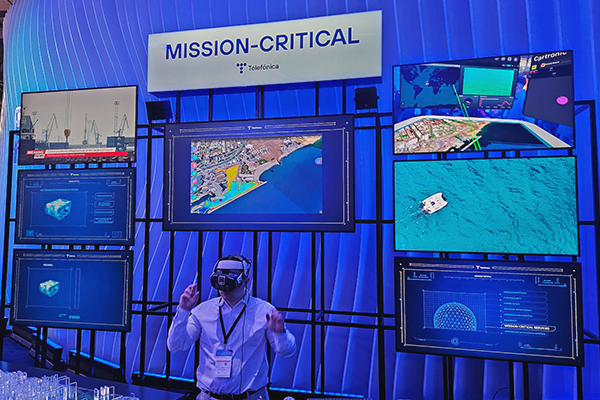
Network resilience and service continuity is an important theme for operators at this year’s show amid escalating geopolitical tensions and growing concern over the impact of natural disasters. To address this, Telefonica showed off an emergency response solution for civil and military environments, using a centralized command-and-control station that can analyse and execute an entire operation.
The real-time demonstration of the Mission-Critical Dome connects locations in Barcelona where disaster simulations have been generated. In one fictional example, heavy rain caused a river to overflow, leading to extensive flooding and the loss of power. Telefonica showed how coverage, bandwidth, low latency and multiple connections can immediately restore communications, coordinate personnel and facilitate medical efforts.
Orange CEO Homes In on Trust During Morning Keynote
Orange CEO Christel Heydemann reiterated her company’s focus on trust during a packed opening keynote, in which she outlined a goal to move from pure connectivity provider to a “trusted orchestrator of digital ecosystems”. Her presentation followed the launch of the company’s latest strategic plan, Trust the Future, last month, in which AI and cybersecurity were leading themes. She pointed out that as technological power accelerates, trust doesn’t automatically follow, explaining that people are uncertain about which calls to answer or which links to click. She also talked about the importance of network resilience, particularly given current global unpredictability, and shared a goal to ensure connectivity.
6G, Automation and AI Shift Brings Opportunities for Qualcomm
As it continues to build a networks business, Qualcomm unveiled the Agentic RAN Management Service, part of its Dragonwing RAN Automation Suite. Example agents include performance monitoring, digital twins, customer experience, execution and configuration. The company also announced enhancements to its Dragonwing QRU and QDU products to tackle beamforming channel prediction and uplink link adaptation, all with factory calibration.
Despite its extensive 3GPP-related intellectual property for radio — highlighted again by its X105 5G modem-RF announcement (which will be covered in tomorrow’s blog) and 6G research and vision — Qualcomm remains a small player in RAN equipment. The industry’s move to place AI into the heart of the RAN offers an opportunity for Qualcomm. However, other suppliers are moving extremely quickly. Numerous partnerships and alliances are being formed, with even the largest mobile network suppliers seeing that they can’t go it alone. These collaborations should give Qualcomm another way to grow its networks business, if it chooses to embrace them.
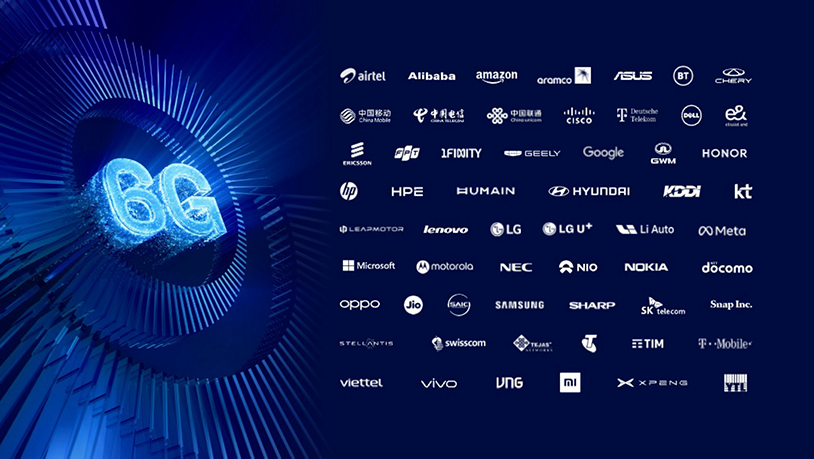
In 6G, Qualcomm announced a swathe of collaborations on devices, networks and cloud with various companies. Notably, this alignment sets a target date of 2029 for 6G, one year earlier than many had expected, but 10 years on from the first mobile 5G launches. This is a broader scope than networks alone and reflects the need for the whole ecosystem to work together; devices and networks suppliers can’t develop 6G in isolation.
Qualcomm Expands Personal AI Portfolio with Snapdragon Wear Elite Platform
Qualcomm announced the launch of a new specialized wearables platform with the Snapdragon Wear Elite, designed for watches, pendants, pins and other AI-integrated wearables. The silicon features an industry-first NPU-powered wearable platform, as well as a fivefold improvement to CPU performance, and seven times faster GPU processing than its predecessor. These compute improvements combine to support a 2 billion parameter on-device AI model. The product’s architecture also enables a host of major technologies, including 5G RedCap, narrowband satellite (NB-NTN) connectivity through partner, Skylo, and micropower Wi-Fi.
With partners including Google’s Wear OS, Samsung and Motorola, Qualcomm is building another impressive ecosystem as it expands its consumer AI portfolio. The major design win comes from Samsung integrating the platform into the Galaxy Watch. Qualcomm now offers a range of products for all AI-integrated consumer tech, from smartphones and wearables to extended reality and earbuds. This breadth puts the company in a strong position to support manufacturers as they develop newer designs to further drive personal AI companions and assistants.
Intel Aims to Head Off Rivals with Ericsson Collaboration
Against the backdrop of high-profile Nvidia and Arm-led initiatives to drive AI into mobile networks, in RAN, long-term partners Ericsson and Intel reaffirmed their relationship “to accelerate the path to commercial AI-native 6G”. The announced collaboration spans the core network, cloud, standards and edge computing. Intel is currently a critical supplier in all these areas but faces rising competition. Ericsson’s RAN makes extensive use of Intel silicon, but Ericsson is also exploring alternatives including AMD and Nvidia Arm platforms.
When the AI-RAN Alliance launched at MWC two years ago, Intel was notable by its absence. However, the company knows it must have, at a minimum, the computing power to support AI-for-RAN uses; in essence, this part of the AI-RAN vision aims to improve signal performance and energy efficiency on the radio. If Nvidia’s aspirations to drive AI-intensive, non-RAN workloads that require Nvidia-class GPUs come to fruition, then Intel may struggle. However, the company has time to develop its solution to improve AI performance, provided it can enable Ericsson and others to deliver competitive AI for RAN features.
In standards, this is an important announcement. For 5G and 6G, the 3GPP remains the key industry body — the AI-RAN Alliance is focused on implementation and not standards. Intel can continue to be a key player through relationships like this in the path to 6G.
TCL Announces a Slew of New Devices
As always, TCL showcased new devices in multiple categories, some of which had already been on display at CES earlier in the year. The company continues to expand its product range using its in-house Nxtpaper displays. To support this, it launched the latest generation of Nxtpaper displays, its integration with AMOLED display technology resulting in a more vibrant, premium experience. This move should enable TCL to move further up the smartphone price curve — a priority given TCL’s focus on low- and mid-tier smartphones, which are becoming more expensive because of the much-discussed memory shortage.
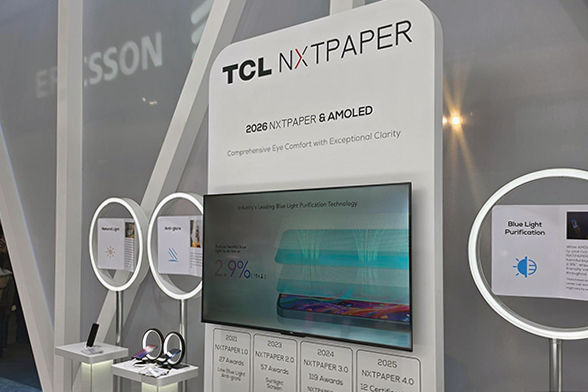
The company also demonstrated the TCL Note A1 Nxtpaper note-taking device, which is similar to the reMarkable and Amazon Kindle Scribe products, and a new tablet, the TCL Tab A1 Plus. In addition, TCL continued to focus on low-cost 5G connectivity products with a new Mi-Fi device, the TCL 5G Mobile Wi-Fi B50 Pro, and a new entry-level router, the TCL 5G CPE B50 with 5G. This is a strong category for TCL, which works with numerous operators worldwide.
Huawei Cloud Sharpens Its AI Cloud Play with HCF and CodeArts
Huawei Cloud’s MWC summit in Barcelona was more than a product showcase. The company presented an enterprise AI cloud narrative that spanned overseas growth, full-stack capability and industry execution. It also launched two notable products: Huawei Cloud Foundation (HCF) for hybrid cloud modernization and CodeArts for AI-assisted software development and delivery. Together, they show Huawei trying to strengthen both the infrastructure and operational foundations for AI, and the software delivery layer needed to turn AI capabilities into production outcomes.
The strategic value of the announcements lies in where Huawei is choosing to compete. HCF is a sensible move into the control-point conversation for hybrid cloud: helping enterprises to modernize mixed estates, preserve existing investments and improve resilience without forcing wholesale replacement. It compares well with the strategy behind platforms like VMware Cloud Foundation, even if HCF isn’t yet a like-for-like proposition in terms of maturity, ecosystem depth or market presence.
CodeArts is also more substantial than a simple AI coding-assistant pitch. Huawei positions it as spanning life-cycle orchestration, quality, security and enterprise pipeline integration. However, we caution that code generation can improve productivity, but it doesn’t eliminate the need for architecture, integration, testing, compliance and operational ownership.
Huawei’s MWC message was stronger and more coherent than many expected, but the real test isn’t the launch narrative. It’s whether HCF and CodeArts can deliver repeatable production outcomes, and to what extent regional trust and policy constraints limit adoption in key Western markets.
Colt and Microsoft Apply Agentic AI to Enterprise Quoting
Colt Technology Services announced at MWC that it has developed a proof of concept with Microsoft using agentic AI to automate complex enterprise pricing. The system is designed to reduce quote generation times from several days to about 10 minutes by coordinating inputs across multiple systems and validating pricing logic for large, multiregion infrastructure deals. Colt reports high accuracy in early testing and intends to extend the approach beyond quoting into other stages of the enterprise customer life cycle.
What’s noteworthy here isn’t simply the reduction in quote times, but the specific type of workflow being automated. FDM CCS Insight research shows that early success in agentic AI is most credible in bounded, repeatable, high-value processes with clear playbooks and measurable outcomes. Enterprise pricing fits that profile. In Agentic AI: The Supplier Reality, we argue that production readiness depends less on autonomy claims and more on operating-layer maturity, including identity binding, policy enforcement, observability and evaluation. The test for deployments like this will be how well they’re governed and evidenced at scale. In 2026, the real transition is from demo-stage agents to production systems that can be governed, monitored and audited within core enterprise workflows.
If you’d like to discuss any of the stories we touch on here, please get in touch. And if you’re attending MWC: come and see us! Click here to book a meeting.


 LinkedIn
 Email
Email
 Facebook
 X
X