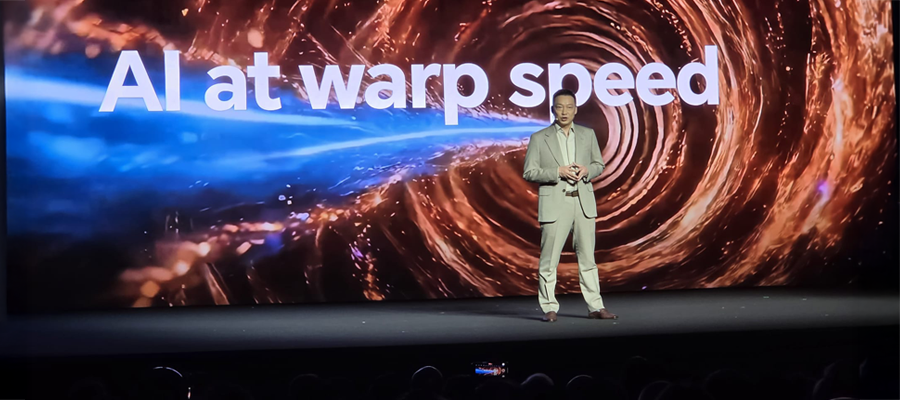
MWC 2026, Sunday 1 March
MWC 2026 officially opens its doors tomorrow, and our team is once again on the ground in Barcelona covering all the major announcements.
This blog kicks off our daily coverage with a pick of news and developments ahead of the event. Several companies held press events prior to the show, and below is our initial take on the main stories so far, ranging from AI and network innovation to new smartphones and connectivity solutions.
Remember to subscribe to the FDM CCS Insight blog to receive our daily insights from MWC 2026 straight to your inbox.
Nvidia-Led Group Commits Future Networks to Be Open and Secure by Design
A group of suppliers and operators is supporting Nvidia’s vision for future AI network deployment. As an effective manifesto for how to implement 5G-Advanced and especially 6G standards, the group’s five principles are that networks should be open, secure, trustworthy, AI-native and software-defined. This extends the principles of Open RAN to enable a faster iteration cycle through greater use of software. Also, it reflects the rising importance of networks as critical national infrastructure.
The suppliers joining with Nvidia include large players such as Cisco, Ericsson and Nokia as well as Booz Allen, Mitre, NTIA and ODC. Notable among the operators is BT’s presence: it isn’t usually at the forefront of global leadership in mobile network innovation. However, with its focus on critical infrastructure, this initiative aligns with CEO Allison Kirkby’s aim to position BT as a national champion.
The other operators are SoftBank and T-Mobile — both of which have previously publicly committed to Nvidia AI RAN — as well as SK telecom and Deutsche Telekom. These companies are likely to be just the first pack because Nvidia is hoping an open approach to AI RAN will enable a more diverse ecosystem of suppliers to accelerate innovation.
The geopolitical implication is clear. The 6G standard remains a global effort, but approaches to implementing those standards are rapidly diverging between Western suppliers in this group and those headquartered in China, which favour an integrated single-vendor approach to the radio access network (RAN). Vertical integration brings efficiencies and is the traditional approach; Nvidia and others aim to improve innovation speed through openness.
The spectre of public safety is only just beneath the surface in this announcement. With AI RAN, future integrated and sensing capabilities, and the clear importance of telecom networks as critical infrastructure during times of crisis, it’s becoming important to increase the level of resilience and robustness of telecom networks. Designing that capability upfront should lead to stronger networks than trying to retrofit trust and security.
Operators to Champion AI Opportunities at MWC 2026
In keeping with the leading theme of the overall event, telecom operators will focus strongly on opportunities from AI at their exhibition stands this year. Demonstrations will span network autonomy and optimization, customer service, AI data centres, AI solutions for enterprise and the public sector and use of the technology for applications like drones and robotics.
Digital sovereignty and business continuity will also be hot topics, as operators eye an opportunity to position themselves as trusted partners to win business from enterprise or government customers amid ongoing geopolitical turmoil. Other leading focus areas for operators will include network APIs, quantum technologies, network slicing, satellite and connectivity for societal good.
Honor Showcases AI Vision, Updates Flagship Foldable and Teases Robot Phone
At an extensive keynote presentation, CEO James Li shared the company’s vision for what it calls Augmented Human Intelligence, centred around its Alpha Plan strategy, which was unveiled at MWC 2025. This builds on its partnerships with Google and Qualcomm, which both appeared on stage.
After seeing growing success with AI-powered services in the Chinese market, Honor hopes to get further traction on the global stage. We expect the Alpha brand to be central to this vision, being used for the company’s most-premium devices as well as its retail stores.
The hero device unveiled at MWC was the ultrathin 8.75-millimetre Honor Magic V6, an evolution of its Magic V5 foldable. The main upgrade is the 6,600 mAh silicon-carbon battery, up from 5,820 mAh. Other enhancements include a brighter, more-robust screen and an upgraded camera. The device also features the Qualcomm Snapdragon 8 Elite Gen 5 Mobile Platform, underlining its position as the premium-tier chipset of choice for most flagship smartphones in 2026.
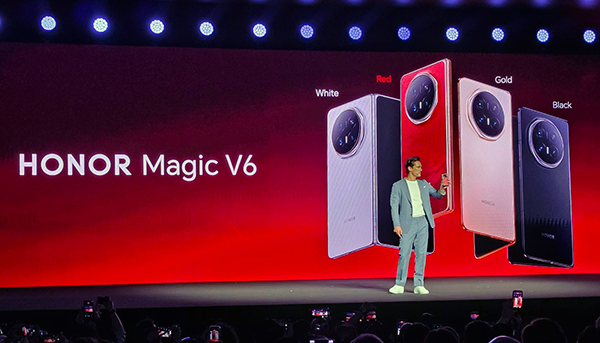
As with all other Android flagship smartphone launches over the past 18 months, AI powered by Google Gemini was positioned as a central feature of the device, with elements such as AI suggestions incorporated into the user experience. It also offers agentic AI capabilities linked to core phone applications, particularly Google’s suite of apps. Honor continues to be among the leaders in foldable devices, and the Magic V6 is another positive step in this direction.
Additionally, Honor showcased its Robot Phone, which was first revealed as a concept in October 2025. This will be the first flagship product using the Alpha brand. The phone has an integrated motorized three-axis gimbal 200-megapixel camera, and we expect it to be one of the headline-grabbers at MWC 2026. There was some speculation that the device would be launched at the event, but it won’t be commercially available until later in the year. This was accompanied by the news that Honor is also developing a humanoid robot.
Honor also unveiled a new tablet, the MagicPad4 (€699), and a new Intel-powered Windows laptop, the MagicBook Pro 14.
Nvidia Fires AI Forward on Multiple Fronts
With a barrage of announcements, Nvidia is highlighting its central role in telecom AI at MWC 2026. It points to more than 60 partners, over 90 partner demos and over 40 partner announcements to demonstrate its traction. These span all parts of the mobile network, from automation in the core to network design, operations and on the edge. In addition, the AI-RAN Alliance — of which Nvidia was a founding member two years ago — has reached 130 members.
Nvidia’s momentum is extensive. In the RAN, it highlighted field trials of its AI RAN using 5G. It isn’t waiting for the 6G standard, which the industry is designing from scratch to be “AI native” rather than with AI as a later add-on. Indosat announced it had achieved the first live AI-RAN call in South-East Asia using Nokia Cuda-based virtualized RAN (vRAN) and Nvidia Arc. T-Mobile did the same in the US. On Sunday, Samsung also announced it had achieved a multicell test using its vRAN software and Nvidia’s platform, mirroring large suppliers Nokia and Ericsson that are deepening their collaboration using Nvidia’s architecture.
Highlighting the potential for AI RAN to increase vendor diversity, Eridan, Liteon, Quanta Cloud Technology and WNC showed compatible solutions. On the software side, SynaXG is showing the first mmWave AI RAN, which increases throughput from between 5 Gbps and 10 Gbps with 5G vRAN to 36 Gbps on a single 1U server. Nvidia has a stronger focus on open software innovation as it joins the open source-focused OCUDU Ecosystem Foundation — established suppliers must assess where value and differentiation will exist if Nvidia’s vision for an open AI-based network.
Almost 20 years ago, the arrival of Apple’s iPhone and Google’s Android ecosystem disrupted the phone market. Now, Nvidia has a claim to be as much of a change agent in mobile networks through its AI software and hardware capabilities. As then, there’s risk for established suppliers and opportunity with the innovations.
Nokia Must Fix the Present with Its AI Bet, and Can’t Wait for a 6G Future
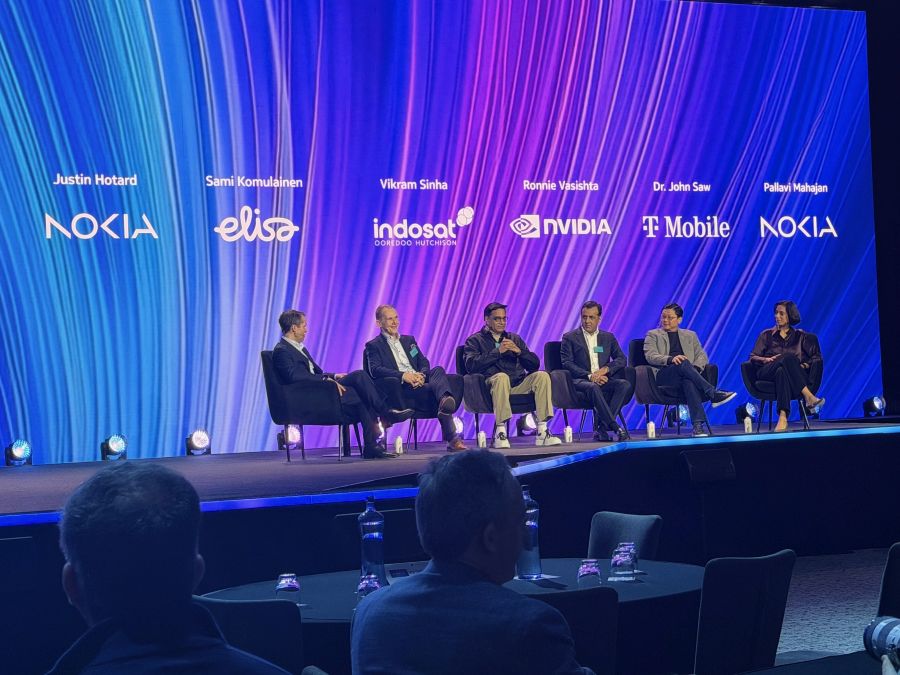
Nokia held its signature media and analyst event on Sunday, with CEO Justin Hotard setting out the company’s vision as well as announcing a few new products. Most of the event was about the AI network opportunity, why AI traffic is different, and highlighting Nokia’s progress with AI RAN. Mr Hotard emphasized the rich ecosystem of companies that need to collaborate. He argued that the goal of Nokia’s relationship with Nvidia is to build a programmable, adaptable and upgradeable architecture, and it isn’t an approach that just aims push GPUs to operators and then sell spare cycles for AI.
At the event, Nokia confirmed its planned timescale for AI RAN — but it isn’t going to significantly help Nokia’s bottom line for several years. The company expects field trials of AI RAN 5G software in the fourth quarter of 2026. But in little more than 18 months from now, in the final quarter of 2027, Nokia expects commercial deployments and 5G feature parity. Nokia’s plan, correctly, isn’t to wait for 6G but move ahead now. One advantage of deploying Nokia’s solution is that it expects 6G will be a software-only upgrade. On stage Mr Hotard was joined with speakers from Elisa, Indosat, Nvidia and T-Mobile to discuss AI RAN. In further announcements Nokia flagged AI RAN implementation tests with T-Mobile, Indosat and SoftBank.
Other announcements included one with Ericsson: the companies aim to cooperate on developing autonomous networks, spanning cloud and Open RAN. Ericsson will become a member of Nokia’s SMO Marketplace and Nokia will join Ericsson’s rApp ecosystem.
Also, Nokia unveiled new Doksuri radios in its AirScale portfolio that offer a claimed 30% improvement in power efficiency with 25% less weight and a new mounting system that Nokia says can reduce installation time by 70%.
Nokia must still work hard to overcome widespread industry cynicism about the costs and benefits of using GPUs in the RAN. But its rivals are embracing AI too. The risk for Nokia is that even if AI RAN succeeds, and all the ambitious non-RAN AI workload scenarios generate revenue, Nokia may not be the main supplier to benefit.
Ericsson Is Also Embracing AI RAN
Like Nvidia, Ericsson is joining the OCUDU Ecosystem Foundation as a founding member. OCUDU is under the Linux Foundation and aims to foster network innovation through an open-source approach to CU/DU, or centralized unit and distributed unit. This ties directly to the work of the AI-RAN Alliance, of which Ericsson is also a member. Ericsson’s moves at MWC 2026 highlight that, even though it lacks the high-profile investment from Nvidia of rival Nokia, it still intends to be a leader in open and AI-native networks.
On the eve of the MWC, Ericsson also made two announcements with SoftBank. The Japanese operator has been one of the biggest advocates for AI RAN. Given Nvidia’s investment in Nokia, it’s notable that Ericsson is also embracing AI RAN. In part, this is because Ericsson’s Japanese customers are supporting it and the country is too big a market for Ericsson not to meet its customers’ needs. But it’s also a natural continuation of the move toward Open RAN and rApps that helped Ericsson to displace Nokia at AT&T.
The first announcement was that the companies had integrated Ericsson’s Intelligent Automation Platform with SoftBank’s in-development AITRAS Orchestrator. This supports linking rApps running on the RAN with AI workloads on separate clusters. Separately, the two companies announced a proof of concept that allows robots to offload computational tasks to edge computing capabilities. Robots, physical AI and drones are fast becoming one of the main new uses for future mobile networks. The designers of 6G are looking at devices’ requirements and wider impact closely.
Xiaomi Unveils Trio of Flagship Smartphones with Focus on Leica-Branded Cameras
As has become customary at MWC, Xiaomi unveiled its latest flagship smartphone portfolio for the European market. These are all powered by the latest Qualcomm Snapdragon 8 Elite Gen 5 processor, with a focus on high-quality photography as part of its long-established partnership with Leica. Given the importance of camera functionality to consumers when purchasing a new smartphone, this is a smart move, but one that all leading smartphone-makers are also focusing on.
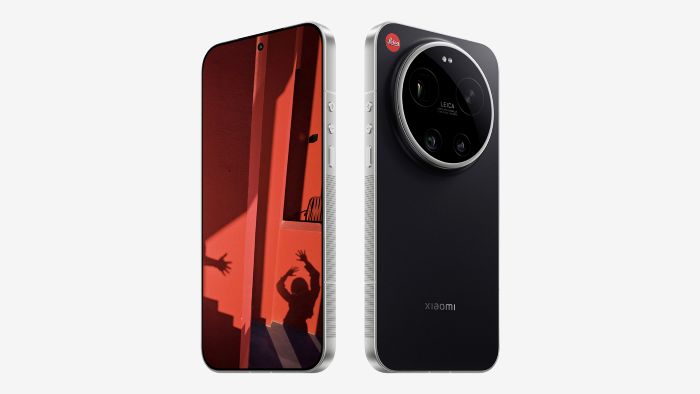
The key device is the Xiaomi 17 Ultra, priced at €1,499. It features a Leica-branded camera array, a 1-inch 50-megapixel main sensor and a 200-megapixel periscope telephoto lens with a 17.2x “optical level” zoom. It incorporates a 6,000 mAh silicon-carbon battery with 90-watt fast charging. This device is supported by the Xiaomi 17, which retails for €999 and is a more-compact variant. It also benefits from a Leica-branded camera and a 6,330 mAh battery with 100-watt wired charging.
To cater for camera enthusiasts, Xiaomi is also offering the Leica Leitzphone powered by Xiaomi at an eyewatering €1,999. This is an enhanced version of the Xiaomi 17 Ultra, with retro styling, exclusive Leica photography modes and a physical rotating camera ring to control zoom.
Other products announced included two new tablets, the Pad 8 (€449) and Pad 8 Pro (€549), the Xiaomi Watch 5 powered by Wear OS 6 (€299.99), a Bluetooth tracker, the Xiaomi Tag and an ultrathin 6-millimetre 5000 mAh power bank.
Although Xiaomi focused on high-tier products, most of its sales remain in the low- and mid-tier. Like other manufacturers in this segment, it now faces considerable price pressure because of supply issues for memory components. This has emerged as a major underlying theme at MWC 2026.
If you’d like to discuss any of the stories we touch on here, please get in touch. And if you’re attending MWC: come and see us! Click here to book a meeting.


 LinkedIn
 Email
Email
 Facebook
 X
X