Orange Puts Trust at the Centre of Its Annual Tech Showcase
Last week, I attended Orange’s annual technology showcase, OpenTech, in Paris. The event brought together hundreds of customers, partners, developers and the media to see over 50 product demonstrations and hear from senior executives. It was the fourth edition of the company’s event, and you can read my previous reviews from 2023, 2024 and 2025.
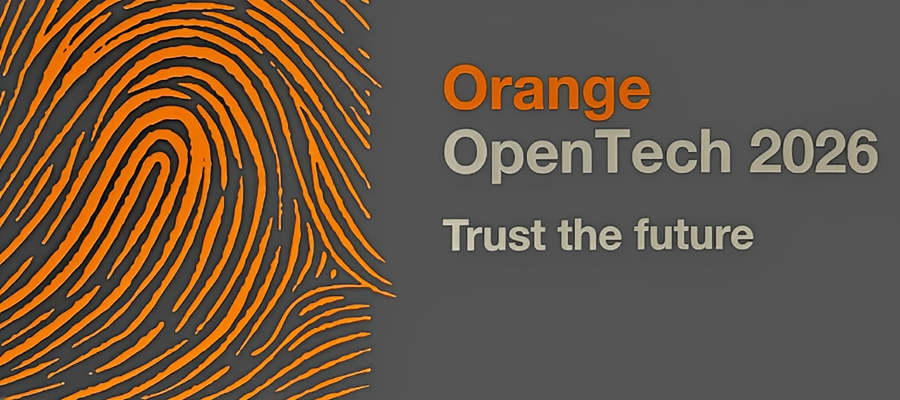
Inevitably, AI was the dominant theme, as the company sought to capitalize on rapid recent development. But amid the unerring hype that surrounds the technology, its narrative was carefully considered, regularly referring to its strategic plan, Trust the Future, which it unveiled earlier this year. The plan includes an emphasis on trusted, resilient and sovereign solutions that can help customers navigate their increasingly complex and uncertain environments.
Orange made several announcements, the most eye-catching being a €250 million allocation to its Ventures arm to invest in start-ups, doubling the current commitment. The main focus will be on AI and cybersecurity; other areas include cloud services, fintech and digital health. A fifth (€50 million) will be assigned to Africa and the Middle East. This reflects Orange’s fastest-growing geographic segment and hints at a greater emphasis on the region going forward.
During a press conference, chief strategy officer Jerome Berger said that Orange Ventures already has 40 active portfolio companies, including six unicorns (privately owned start-ups valued at $1 billion or more). This includes well-known brands like Airalo and Monzo.
Also at the press conference, chief technology and innovation officer Bruno Zerbib outlined the growing role of agentic AI in marketing. He shared a vision in which future campaigns will be run by agents for agents, focusing on areas such as pricing and product features. However, humans will still be crucial to purchasing decisions where there’s an emotional attachment, the product value is high or there’s cultural relevance, he added.
At the event, Orange confirmed the release of five large language models for West African language Wolof, a move that aligns with its ambition to make AI services more inclusive and accessible.
It also introduced a new “protected mode” for Live Intelligence. This is the company’s platform that brings AI capabilities together to help organizations support employees in their day-to-day work. The update ensures that models, agents, data and documents stay within an environment operated by Orange in France, which should mitigate fears over AI governance, privacy, and security.
One of Orange’s flagship demonstrations showed how agentic AI can enhance customer service. The solution — already deployed by Orange Spain and developed alongside Google Cloud and Gemini Enterprise — aims to offer customers the smoothest path to staying connected when they travel abroad. An agent can identify the most suitable plan, activate it if needed and guide the customer through the process of setting it up on their phone. The differentiator is that instead of following predefined scenarios, it remembers the context of the conversation and adapts its actions accordingly.
To address concerns about phone number spoofing, Orange showed a prototype solution that confirms the identity of callers using verified information such as their address or age. It gave two examples: checking someone’s identity before they contact a call centre to carry out a sensitive transaction, and making interactions between individuals more secure, such as when arranging to rent a property.
Other demonstrations included an intelligent connectivity platform for private 5G networks that can be managed remotely; Orange Quantum Defender, a quantum-safe networking and cybersecurity service launched in partnership with Toshiba to protect enterprise and public-sector data against quantum computing threats; and secure payment and money management solutions for Orange Money, which passed 50 million customers earlier this year and is present in 17 markets.
The benefits and risks of the different approaches to using AI in the radio access network (RAN) were debated during a panel. AI-RAN has recently generated significant interest because of its potential to make more-efficient use of spectrum resources. Many operators are now evaluating the opportunities, including all three in the UK.
The discussion highlighted the distinctly different approaches of Ericsson and Nokia. Ericsson prefers to integrate its software with its own silicon, but Nokia, supported by its close partnership with Nvidia, is making a silicon-agnostic pitch to telcos.
Sat between the heavyweight rivals, Orange Group chief technology officer Laurent Leboucher said that performance and economics will determine the operator’s choice of supplier. However, I’m certain that both will continue to have important roles to play.
I’d like to thank Orange for the invitation to attend and will keep a close eye on the progress of the demonstrations showcased at the event.

 LinkedIn
 Email
 Facebook
 X