Rise of Hot Spots Could Undermine Entry-Level Broadband Services
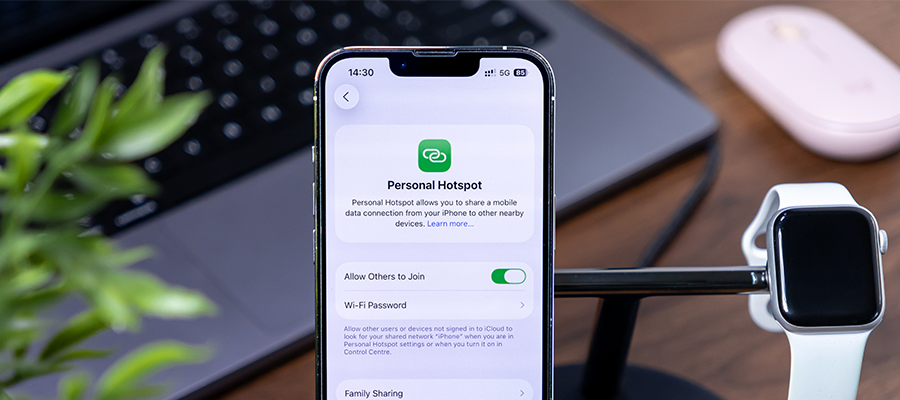
A new area in CCS Insight’s annual consumer mobile-buying research explored people’s use of the personal hot spot feature on their mobile phone. The ability to tether other devices isn’t new. But with data bundles becoming more generous, this feature appears to be steadily rising in value.
In our recent survey of over 1,000 UK consumers, which was nationally representative by age, gender and region, 44% of people told us they use their mobile phone as a personal hot spot to share data connections with other devices. Of these, about two-thirds do so at least once a week.
Significantly, the results showed a clear correlation between hot-spot usage and the amount of data people have in their mobile plan. Among people with 20 GB or more data allowance each month, hot spot usage jumps to 53%.
The survey also identified growing appetite for unlimited data plans, a trend that should encourage further use of hot spots. About a fifth of respondents already take the all-you-can-eat option, while two-thirds told us they’d consider it when they next renew their plan.
For me, however, the most interesting finding came from asking people where they use the hot spot feature. The top response was in public places such as restaurants and coffee shops. But using a hot spot in the home was almost as common.
This got me thinking about when and why people would tether at home and whether they see this as an alternative to taking a broadband service.
People in smaller households could find it more cost-effective to use a hot spot to tether to a mobile plan with a generous amount of data than to pay for both a broadband and a mobile service. Having a single connectivity plan for both inside and outside the home could prove attractive to people who need a limited amount of bandwidth, for example if they don’t work from home or they have just a small number of connected devices.
This approach could appeal to students, people living in rental accommodation or simply those seeking to reduce their connectivity spend or avoid a long-term contract. Our survey showed that hot-spot usage was highest among young people, a group that’s well represented in these cost-conscious categories.
And there’s no shortage of good-value mobile plans on the market for people taking this approach: iD Mobile, for example, offers a £17 per-month unlimited data plan without any restrictions on tethering.
Another reason to use personal hot spots in the home is when fixed-line broadband is patchy or not yet available. This includes people living in remote places, or in apartment blocks where wayleaves haven’t yet been granted to allow fibre services to be made available. However, the mobile signal would need to be sufficiently strong, and heavier data-users would probably be more drawn to a fixed wireless access package or Mi-Fi plan.
Hot spots also offer the opportunity of a more reliable connection if household members are placing strain on the home broadband connection, such as by gaming or streaming high-definition video. This could be a good option for people working from home and not wanting to risk interference, for example during online meetings.
Lastly, people might tether in the home as a last resort, for example in the case of a broadband network outage or power cut.
The potential for customers to prioritize a mobile connection over a fixed-line connection comes as the UK’s broadband sector continues to struggle for growth, hit by market maturity and a slowdown in housing construction.
But the lack of new customers doesn’t mean this is an inactive market. Supported by an accelerating roll-out of full-fibre connections that now reach almost 80% of UK premises according to Ofcom, savvy customers are switching providers to take advantage of faster speeds or better-value plans. FDM panel data shows that broadband sales in 2025 at speeds of 150 Mbps or higher jumped 25% year-on-year to represent 60% of the market. Many 150 Mbps plans now cost less than £25 per month.
As well as possible substitution by tethering, fixed-line broadband faces a threat from satellite. According to Ofcom, Starlink had over 110,000 home broadband customers in 2025, up from 87,000 a year earlier. This may represent a fraction of the market, but recent sharp price cuts are likely to accelerate adoption this year. Then there’s Amazon Leo, which is expected to enter the market in 2026, heralding new competition and the prospect of even lower prices for satellite services.
Amid the mix of full fibre, 5G mobile, fixed wireless access, Mi-Fi, satellite and personal hot spots, customers have more connectivity options at their disposal than ever. A few, it seems, are becoming more inventive about how they use them.
For more analysis, see Survey: Mobile Buying, UK, 2025

 LinkedIn
 Email
Email
 Facebook
 X
X